Monday, March 22, 2010

Map of Christianity

Rob and I both loved this map of Christianity across the US, linked by Wehr in the World (with great discussion) from Floating Sheep (with more maps).

And the corresponding map of Europe:

I noted how much less diversity there is in Europe. Rob responded with this line of thinking:
You know, what you said about the Europe map showing less diversity supports the argument that the availability of religious choice in the US is part of the reason that religion has remained vital and satisfying to Americans while it hasn't for Europeans.

And that makes me wonder about the dynamics of religion in other parts of the world...Japan (low diversity, low interest in religion)...the middle east (high diversity mixed with religious violence maybe promotes interest in religion and in group identity)...Africa (see the middle east)...

I don't know much about religion in other parts of the world. I guess S. America is mostly Catholic? Are the native religions alive at all? How long has China been relatively irreligious? Probably since before the cultural revolution I'll bet. Otherwise the cultural revolution probably wouldn't have been possible. How do Indian Hindus feel about their religion? I just don't know.
I love how this man thinks.


Wednesday, March 17, 2010

Map bliss

Yesterday I became interested in cartography. It's a natural extension of my love for geographic scribbles and fonts. As a result, I ended up with a rich list of links and maps.

Most of you are already frequent visitors to Strange Maps, and I wanted to share some of the other things I've found during my mapping splurge:

I love xkcd and just found this awesome map (click to enlarge):


VerySpatial, which, along with a few other sites, led me to this gem:

It must be seen in its original full size to be fully appreciated.

Cartastrophe. The name says it all. Fantastic.

The Map Room. It won my heart with this 8-bit map of New York
but there is so much more. Fascinating. I could sink hours into that site.

Geographic Travels is slightly different from the others listed here. More factual, less amusing, but also much more integrated with archaeology and history.

For finding good color schemes, I love kuler and ColorBrewer.

Some great forums over at CartoTalk and inspiration over at Making Maps.

Friday, March 12, 2010

How change happens

It happens slowly, but it has a definite momentum.

And it first appears unrelated, but I don't believe it is. Childbirth in the US is changing.

First, the news that the maternal mortality rate in the US is rising dramatically. Maternal mortality is defined by the World Health Organization as ‘‘the death of a woman while pregnant or within 42 days of termination of pregnancy, irrespective of the duration and the site of the pregnancy, from any cause related to or aggravated by the pregnancy or its management, but not from accidental or incidental causes.’’

The US currently ranks 33rd out of 33 industrialized nations. The rate, which is measured in deaths per 100,000 births, rose from 17 in 2000 to 21 in 2005, and is still climbing.

A report commissioned by Amnesty International shows that in California, the maternal mortality rate in California has tripled in a decade, rising from 5.6 deaths per 100,000 to 16.9 per 100,000 in 2006 (these statistics are always a few years behind, so if the trend has continued, we can expect that the current rate has not improved and may be higher).

Why? The reasons range from hemorrhage to blood clots to "underlying heart disease," which is a surprise. I'm not sure if that essentially means lack of proper prenatal care, a health insurance coverage issue, or too many stops at McDonalds during pregnancy. Not sure how to explain that one. The report has not been officially released, though, so perhaps it will clarify these oddities. Others have suspected that the maternal mortality rate is correlated with the increase in cesarean sections in the US. Our most recent estimates place the c-section rate in this country around 33-37%, depending on which source you use. About one in three women have a cesarean instead of a vaginal birth. By any measure, that's far too high.

And then the quite sudden news about VBACs (vaginal birth after cesarean), which had been officially decried by ACOG (American College of Ob-Gyns) as too risky for women who had an initial or a repeat cesarean, but VBACs are now being encouraged.

Many VBAC advocates have argued for years that vaginal births are safer for women than a repeat of the major abdominal surgery of a c-section, and all signs have shown that they were being ignored. Suddenly the NIH reviews the information and recommends VBACs.

I don't believe these two things are unrelated in their timing. Many women have been vying for change in childbirth in this country. So first we see evidence that our system hasn't been working as well as we had hoped, and immediately following that, we see adjustments being made with major implications for women everywhere (it follows that since more women are having/have had cesarean sections, more will be candidates for VBACs).

Change is (finally!) happening.


Monday, March 1, 2010

Balancing the bad news

There has been a deluge of bad news lately (for example, how those poor penguins from that terribly depressing movie can't get a break).

Honestly, I can't stand the news. I see very little purpose in it. The news paints the world as a scary, dangerous, heartless place. Sometimes it is, but when I start paying too much attention to the media's view, I become terrified and introverted. What does one gain by reading headlines, finding out what terrible things have happened in the world? It's all bad, in my mind.

And that's why I'm grateful for the internet. The best stuff out there is completely unrelated to the news.

Do you love Popcorn? Here's a link to 79 versions of it, all mixed together in a single 12-minute-long masterpiece.

This blog, Music Machinery, is a new discovery, and I'm enjoying it. He's got some great graphs and visualizations. My personal favorite is this one, which shows loudness as a function of time (to track the crescendo) for Muse's song 'Take a Bow':


I love good data visualizations. Which is why I can't stand this one (not created by the same person):


I can't even figure this out. At first I thought it was graphing music playlist classifications across Europe, but evidently the cloud isn't supposed to evoke a geographical image at all. It's just a...cloud.

Sunday, February 21, 2010

Rational Emotion

This is my response to Jenn's post Dismissing Emotion.

There are two kinds of mental process, conscious and subconscious. We can report the logic of the conscious mind, but we can't observe or give an accounting of the logic of the subconscious. However, many people learn the skill of explaining their subconscious processing after the fact, "rationalizing" the conclusions they came to subconsciously. Doing this completes a feedback loop in which the rules the subconscious uses in its processing can be updated. Basically, the conscious mind can be used to discard the false premises the subconscious may have been relying on.The movie Memento illustrates the inverse of how this is supposed to work. Instead of reliably updating old information with new, our hero deliberately deceives himself.


What is emotion? It is the motive impulse, the thing that drives us to act. It is the expression of mental processing, the result of our thinking, where thinking includes conscious and subconscious mental processes.

The conventional wisdom is that it is a mistake to act on impulse/emotion. However, this is something of a misdiagnosis. It isn't that emotion is unreliable, it's that in new situations our thinking is not well-developed and can be mistaken in its conclusions. The conventional wisdom is correct that it's best to pause and take stock and to seek to understand the situation in new light so as to avoid mistakes. But emotion versus reason is a false dichotomy. Emotion flows from reason.

Saturday, February 13, 2010

Turbine Cars


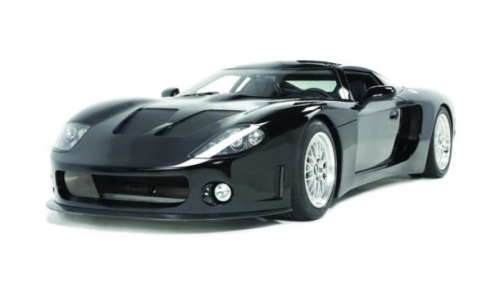
Capstone Turbine is planning limited production of a plug-in hybrid, the CMT-380 that uses a small turbine engine to extend range. The car looks great, as it should because it's a basically just a Factory Five GTM with batteries, an electric motor, and a turbine powered generator to keep the batteries topped up on long trips.

My guess is that the weight of the batteries hurts handling and acceleration somewhat.However, I'm still really excited by this car because I'm persuaded that putting turbines in cars is a good thing.


Turbines have several advantages over piston-engines:

  1. They are smaller and lighter-weight for a given horsepower.
  2. They are much more efficient - more of the energy of the fuel can be turned into usable power.
  3. They are much cleaner burning, producing less NOx because they can run a leaner (more oxygen rich) burn.
  4. They are naturally flex-fuel. Though turbines are usually optimized for one particular fuel they are generally much less fuel sensitive than piston-engines, making flex-fuel designs easy to implement.
  5. They are much more reliable than piston-engines.
For essentially these reasons, turbines are used to power some special purpose ground vehicles, like the M1 Abrams.


Here's another turbine diagram:

So if turbines are so great, why aren't they already being used in cars? They have two serious limitations that have made them impractical until now. The first is that turbines are not good at changing speed. They lose much of their efficiency advantage over piston engines if they are forced frequently change RPM. Also, they don't change speed very rapidly - after all they have a lot of rotating mass that doesn't want to slow down or speed up. The second limitation is that they are high cost.

The brilliant thing about using a turbine in a plug-in hybrid is that it solves the problem of changing RPM. The CMT-380 uses the turbine to spin a generator that charges the batteries when they get depleted. That way, the turbine can spin along at the one RPM where it is most efficient, regardless of how fast the car is moving.

The problem of cost can also be overcome but it depends on economies of scale, and possibly the regulatory environment. For example, tighter emissions requirements may give turbines an advantage over piston-engines. It's certainly the case that if turbines were widely adopted for automotive use that their price would come down somewhat.

Thursday, February 11, 2010

Business Cycle

Systems with feedback loops can have complicated, difficult to predict behavior. However, there are three basic varieties of simple feedback loop, and understanding these three types can lend insight into the behavior of more complicated loops.

The first type is positive reinforcing. These loops runaway in one direction forever, until something in the system changes and the dynamic is allowed to breakdown. The classic example is the runaway population growth of bacteria in a petri dish.


The second type is balancing. This kind of loop is characterized by equilibrium among opposing forces. It takes effort to push these systems away from their natural equilibrium point, and they tend to fall back again once the effort stops. However, they can be complicated by having multiple points of equilibrium.

The third type of feedback loop is oscillating. This is essentially a special version of the balancing type of feedback loop. As with the balancing type there is a force and an opposing force, but in this case the opposing force has a delayed response. As a result the system swings from one extreme to another, like a pendulum, as the system is dominated first by one force and then by the other. Aviators may refer to this behavior as PIO - Pilot Induced Oscillation. If there is a delay between when the pilot gives an input to the control surfaces and when the aircraft responds then the pilot will tend to give too much input and then over-correct, sending the plane into a potentially fatal oscillation. In a way, the PIO acronym puts too much blame on the pilot as this problem is really a result of the system dynamics.


I think the business cycle is the result of an oscillating feedback loop in the economy. Not much of an insight really, except that it implies that there is something structurally wrong with the economic system. Left to its own devices, the system will keep exhibiting this behavior.

The story I was taught in high school economics was that the Fed had been established to interrupt this oscillating behavior, by anticipating it and correcting for it. I was told that the Fed had been enormously successful in that role. I'm not sure that was true.

Can there be a market solution for bubbles and the Business Cycle?

 
Copyright 2009 REASON POWER POLICY